Remembrance Sunday asks something quite specific of us: to pause, briefly, and think about a history that many people now living in residential care carry with them, sometimes through their own service, sometimes through family, sometimes simply through having lived through it as children.
What Remembrance Sunday marks
Held each year on the second Sunday of November, Remembrance Sunday is a national moment to honour those who served and sacrificed in conflict, and to reflect more broadly on the cost of war. It’s a quiet, reflective observance rather than a celebratory one, and it’s marked in different ways by different people.
A generation with its own stories
It’s worth saying plainly: this article won’t tell you any individual’s story, because doing so without genuine consent wouldn’t be honest, however well-intentioned. What can be said generally is that many people currently living in residential care were alive during, or shortly after, a period of history that touched almost every family in the country in some way, whether through service, loss, rationing, or simply growing up in its shadow. That’s not a small thing to carry, even decades later.
How this might be marked together
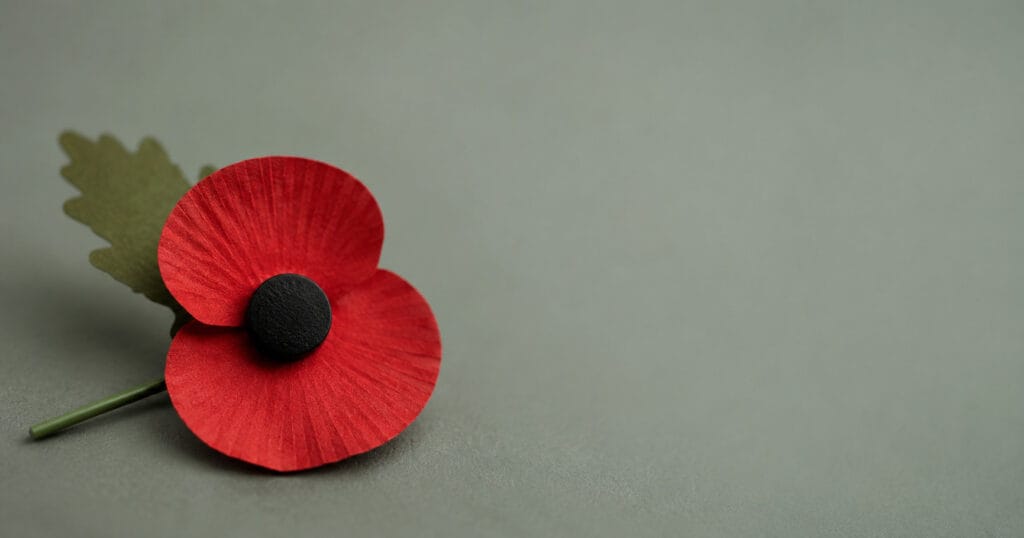
In many care homes, Remembrance is marked simply and quietly: a moment of reflection, a poppy worn or displayed, sometimes a shared silence at 11am. For residents who wish to share their own memories or experiences, that’s welcomed; for those who’d rather not, that’s equally respected. Nobody should feel obliged to revisit difficult history simply because the date has come round again.
A quiet moment, genuinely meant
There’s no particular call to action that fits here, and it doesn’t need one. Remembrance Sunday is simply a day worth marking with quiet respect, for a generation that includes many people now living in our homes, and for everyone who came before them.