
“Assessment” is one of those words that sounds more intimidating than the process it describes usually turns out to be. It’s worth demystifying, particularly at a point when families are already navigating enough uncertainty without adding an unclear bureaucratic step into the mix.
What a needs assessment is for
A care needs assessment is how a home builds an accurate, individual picture of what someone actually requires: not a generic checklist, but a genuine attempt to understand a specific person’s needs, preferences and goals before they move in. This happens at the point of admission, distinct from the ongoing reviews that continue afterwards.
Who carries it out, and how
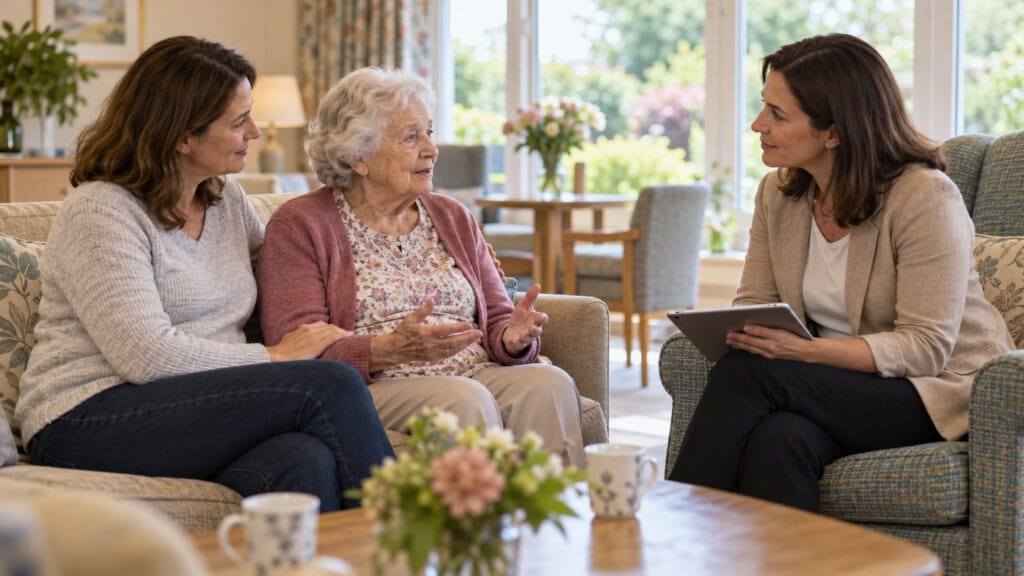
A comprehensive assessment is typically carried out by the Registered Manager or a senior member of the team, working directly with the prospective resident and their family (and anyone else acting in their interests) to build up an accurate picture together, rather than relying on a single form filled in remotely.
What the assessment typically covers
The assessment looks at practical care needs (mobility, personal care, medical requirements) alongside preferences and goals that matter just as much: routines someone values, interests they’d like to continue, and anything specific that would help them feel comfortable and genuinely themselves in a new setting.
Before moving in, prospective residents are often given the opportunity to spend some time in the home first, getting a feel for the environment and meeting staff and other residents ahead of a full move.
From assessment to agreed care plan
Once the assessment is complete, the findings feed directly into a personalised care plan, which is then agreed and signed by all parties, with a contract issued where applicable. This isn’t the end of the process. The plan continues to be reviewed and updated over time, but it’s the foundation everything else builds on. [INTERNAL LINK: Keeping Care Plans Alive: Why Reviews Matter as Much as the First Assessment]
A collaborative process, not a test
None of this is meant to feel like a hurdle to clear. A good assessment is fundamentally collaborative: genuinely listening, rather than simply gathering information to file away. If you’re approaching this stage, it’s worth going in with the same openness the process itself is meant to reflect.